
Johnny Payne Finds the Sweet Spot on Dazzle Me- Our Incredible Interview with Johnny Payne
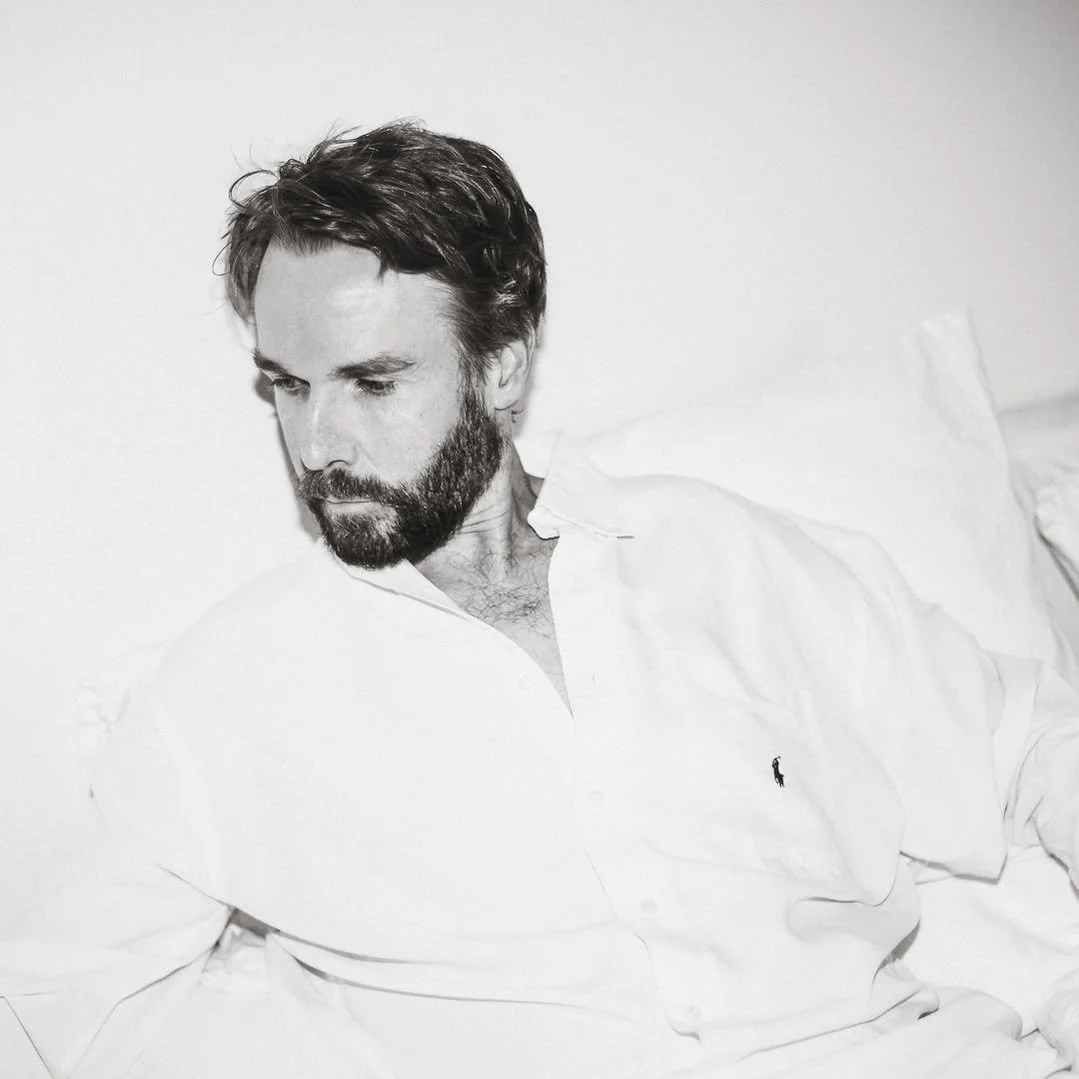
Interview by Keir Nicoll
There’s a quiet confidence to Johnny Payne, the kind that comes from years of listening closely and caring deeply about songs. When we spoke, it was clear he is not just a musician, but a student of music in the truest sense, someone who understands where songs come from and why they last. I had the pleasure of sitting down for an in depth conversation with the Vancouver based indie artist, whose sound blends 70s soft rock, Nilsson inspired pop, and a soulful, classic sensibility that feels both nostalgic and distinctly his own.
Johnny now lives in Sooke, BC, where the trees are tall, the ocean is close, and a trip to town still feels like a proper outing. Out there, tucked between the coast and the woods, he has built a life that feels increasingly rare: quiet, creative, and self directed. He works from his studio on the property, where he writes, records, produces, and makes music surrounded by the kind of space that lets ideas breathe.
Citrus: Where are you on the Island exactly?
Johnny Payne: I live in Sooke, well, kind of past Sooke. It’s pretty far out. We just recently got our first cell tower out here, you know what I mean?
C: Yeah, I’m from Victoria, so I know where Sooke is.
JP: We live between Sooke and Jordan River.
C: Did you go surfing out there?
JP: I don’t, but I have a lot of friends who do. There’s a big surfing community out here. It’s never really been my sport of choice. I find the ocean a little bit frightening.
C: The bottomless, fathomless waters under you that can suck you down to some shark’s mouth.
JP: Yeah, and jellyfish. You know, I love the ocean. I love to look at it. I love to be near it all the time. I like to jump in, but the idea of swimming way out there, especially when the water’s choppy, or when there’s an undertow. It’s real, wild ocean out here. The current itself can be scary.
C: You can feel the drag.
JP: Yeah.
C: I read that you wanted to break free from the rigid schedules of recording studios. You built your own studio. Could you tell me about it?
JP: The studio that I set up to record this album was really more of a pop up kind of vibe. There was a cabin on the property where we lived that I turned into a little studio space with a bunch of the gear that I had. It was not in any way, shape, or form very fancy, a barely functional recording studio, but that was what I liked about it. It was a small cedar cabin and it was more than enough for me to be able to track things in there and do it. Now I’m building a proper, fully equipped studio in a barn that’s also on the property, and that’s the project that we’re in the middle of right now.
C: Yeah, the cabin vibe was kind of the thing you’d see grunge bands doing back in the 90s.
JP: Definitely. It was probably even smaller than that. It’s a tiny little cabin. It had a bed upstairs in a loft, and the bottom floor is maybe five feet by ten feet or something. It’s a tiny little thing. I had a desk in there and I had a mic set up to sing, and I could fit an amp in there. Then I went to record drums and other things with a friend in a similar sort of spot that he has. I spent way too much time tinkering on the album out here like a crazy person, though.
C: Right, the madman in the cabin.
JP: Exactly.
C: Well, that sounds like a good time for a while.
JP: For a while, but then you hit that point where it was really fun and like, “What the hell, I’ll just redo that vocal again, I’ll remix it again.” Then I took it in the car and I was like, “Maybe I’ll mix it one more time again.” It hit a point where it was like, it’s done, or it’s never going to be done, or I’m going to lose my mind. I kind of just stopped.
C: That’s good. You’ve got to cut yourself off at a certain point. As you’re living out in Sooke, it sounds like you’ve had a lot of time and space to look at the simple and honest themes on this record. Were you writing more complex songs before and then decided to pare it down?
JP: Yeah, I think there was an element of my songwriting on the last album, King of Cups, that I put out a few years ago, where I was really searching. It was about a guy who was really searching for meaning in his life, in a city that was challenging him a lot, or making it difficult to survive. I think I was interested in long form songs, lyrically, that were trying to answer deeper questions that were going on in my mind as I was getting older and changing. I wanted it to be sort of prophetic and wandering and a bit more Dylanny in its prose and balladry and stuff like that, going more for that kind of metaphor and imagery.
Now, something sort of clicked with me when I moved out here, that I just basically wanted to write pop songs that were about as simple as I could make them, because that seemed more truthful in a way, to me and who I was, and I found myself enjoying the lyrics more and finding them less cringe worthy. I think the simple way to put it is, if you can say something that is true to you and means a lot to you in the simplest possible way, with the fewest words possible, for me, it’s going to have a lot more strength in it.
C: I totally identify with what you’re saying. Sometimes you want to go as far out as you can with your thinking and your writing, but sometimes it’s just much more powerful to be concise.
JP: Yeah, yeah, yeah. It’s harder too, I find. I’m a real student of old classic pop music and I love those old songs, particularly old standards and the Brill Building stuff that was coming out of those nine to five songwriters. Some of those song lyrics, like “Stardust” and those old great songs, have a way of saying something in one line that just has so much depth to it. Or somebody like Kris Kristofferson, those types of songwriters, I always thought, they use all of the same words that I use, or that anybody uses, but they have this way of putting the words where you’re like, damn, how did they come up with that?
C: Just the perfect placement of the words.
JP: It’s a lot easier when you’re talking about the one eyed jester in the corner, with the green top hat, floating on a ceiling of marbled glass, you know what I mean? I found when I was doing that that my songs were getting a little bit too introspective and whiny and like, woe is me, like a kid in the city that’s let him down and kind of angsty. Eventually I was like “I’m fucking tired of this shit and I just want to sing about the good things in my life.”
C: It’s like you’re a young kid when you do that.
JP: Yeah, exactly. I just want to talk about love and the real things in my life that make me feel good for a change.
C: I really hear the Beatles influence very clearly in this new record, Dazzle Me. From old school Beatlemania era to the larger arrangements, like your strings and horns. I appreciate what you’re doing with that, because it’s understated, and there’s a lot of feeling in it without it being too technical or virtuoso.
JP: The Beatles for me is something that I’ll never get away from, and it’s almost like there was a time when I would try to say to you, “I’m not always doing that,” but now I’m at an age where I’m not ashamed to say that they’re my North Star when it comes to music. They’re the music that I listened to more than any other music, for the longest amount of time. As a child and as a teenager, I studied the music like it was the Bible.
C: Because they’re the original pop songwriters.
JP: I went so deep into that music at the age when your mind is like a piece of clay that you’re moulding. I used to study the lyrics and make sure I knew the lyrics of every song, I knew the chords to every song, I knew the sequence of the songs on the albums. So when you’re doing something like that when you’re 13, 14, 15, you can try all you want, but when you’re making records, it’s going to seep out of you somewhere.
C: Because you’ve internalized it.
JP: A lot of people hear the Beatles in my music, and there is a lot of the Beatles. But there’s a lot of stuff in the records that I make that kind of mixes together. I’ve always thought of myself as a little bit of a collage artist when it comes to pop music. I listen to so many records and have through my life, that it’s about taking a little bit here, a little bit there, and mixing it all together with my own words or whatever I am feeling in that moment, and then it just becomes its own thing.
C: You kind of manifest in your practice what you filter.
JP: Yeah, exactly. I would never ever call people like me, or a lot of people who make music inspired by old music, pastiche artists. I don’t want to throw these guys under the bus, but a band like Greta Van Fleet, it’s like, when you’re wearing the clothes, you’re wearing the costume...
C: Your voice sounds the same.
JP: Yeah, your voice sounds the same, the lyrics are basically just a reinterpretation of Led Zeppelin style lyrics. Whereas I think the rest of us are just living in a world where there’s so much media, music, everything is just in our face all the time.
C: We’re in a media saturated world where we’re bombarded by cuts all of the time.
JP: Well especially because we use the tools that they all used as well. It’s a little bit different than just having a pen and a piece of paper and an idea, because we’re forced to go into these environments where the gear is the same, the recording process is relatively similar, and you’re using stringed instruments, pianos, drums, bass, whatever. So inevitably, when you get into those scenarios, especially with other people, the language that you use is the language of music that’s already been made. So you have to find a way to use that. I’m a producer as well, and some of the most original musicians that I’ve worked with, who are conduits for creativity, still speak that language in the studio, like, “Hey, we should get a Prince guitar solo tone on this,” you know what I mean? It’s just a shorthand to get to the place where you’re creating your own music.
There’s just something about music that was made a long long time ago that’s still so cool, that’s still at the forefront of culture now. You’re just being naive if you’re saying that it’s not a part of the process still.
C: Of course. It’s the legacy of the art form. You can’t get rid of that or avoid that.
JP: Like, am I going to sit here and tell you that my music is the most original music being made today? Of course not. But I don’t think that’s the point anymore, necessarily. The best you can do is just make something that’s meaningful to you and get your message across as effectively as you can and make it pleasing to your ear. Then I think that’s fine nowadays. If people like it at all, or find it pleasing to listen to, then you’ve succeeded. I feel like in the sixties, it seems like there was this thing that you had to change the game with every record that you made. It was like, how are we going to up the ante? They were working from four track tape recorders to eight track to whatever, and it was like, how can we build this technology up and keep doing crazier and crazier things? I don’t know if that’s on the minds of people anymore. I think now they’re kind of happy just to make records and have fun.
C: There’s still change in your approach though, between King of Cups and Dazzle Me.
JP: You’ve got to keep it fresh always. That’s a really good point, because revolution can come in many forms. It doesn’t have to be for the world or for the music industry. The way that you make a record could be totally revolutionary to you, and that can be really inspiring. If you feel you are breaking ground in your own world, then that will reflect when people listen to it too, I think.
C: I really like your multi instrumentalist approach on this album. How do you orient yourself on each instrument when you write a song?
JP: That’s a good question. I think that I always write like anybody else, usually on the guitar or the piano, whichever is closest, and then come up with a melody. When the song begins to develop a bit of structure, when I’m composing it, then from that the other instruments start to come into view in my head, I guess, because you start to feel the changes happening. From there, I usually go to drums, because I have a really rhythmic nature. I don’t know why. I played drums as a kid. I’ve always been drawn to rhythms, and right away I start thinking about the beat, how that’ll go. Then I’ll go back to the piano, start thinking of hooks on the other instruments once the melody’s formed, then I would say bass, unless it’s a really bass driven song.
Bass is really something that I like to wait on and then sort of put on top once everything else is kind of there. The bass on this one is quite singular and special to me on the album because I sort of used it as a way to elevate the songs further from where they were. It’s almost like the songs were done and then I was like, okay, now I’m going to sit and play bass and try to make them even better, like 25 per cent better, just with the basslines.
C: I totally get that.
JP: It’s more about how many melodies you can weave together on each song, rather than it being about one element driving the whole thing.
C: That really comes through in the songs. They feel classic in some ways, but each one has a different mood. Some are a little funkier, some are more lush.
JP: Yeah, a lot of the percussive elements too were big for me because my mother’s Cuban and I love Cuban music, especially percussion. The past two albums have been really percussive. On this one, I really wanted the conga drums and a lot of the percussive elements to be just as important as any instrument on the songs. There are sections of the album that are just one guitar and congas playing. It would be hard for me to play this stuff without a percussionist, I think.
C: I heard that. Did you have bongos or timbales at one point even?
JP: Yeah, there’s bongos, there’s clave, there’s cabasa, there’s guiro, there’s timbales I think on one. There’s some triangle. And I got people for that. I firmly believe if it’s something as sacred as that, like the art of playing a drum that well, then you should get someone in who’s really good at it, because the difference between someone who can kind of slap a conga drum, like I would probably try to do and it would be alright, compared to someone who’s trained to do it, who’s really great, is a world of difference. Maybe no one would think something like that of bongos or congas or something, but it really is. So this guy I got in Vancouver, Robin Layne, he studied with Cuban percussion masters and so that’s the kind of guy you want for something like this.
C: Speaking of other musicians on your album, I was really impressed that you have Yukon Blonde on “Real Magic.” How was working with them?
JP: Oh, they’re the best. They’re great friends of mine. We’ve toured together and I host a podcast with James, the bass player. He’s one of my best friends and I’ve always thought they were such a great disco band even though they can do it all. Their latest record is way more rock and roll, classic rock and roll, like Tom Petty or something, but I always thought they were an amazing disco band. They’re so great with keyboards and synthesizers and lush layers, and as a rhythm section, James and Graham can get into this great disco pocket, so I kind of wrote that song with them in mind.
C: Was there any particular song on the album that you wanted to talk about?
JP: Not really. I guess I kind of like them all.
C: On the first song, “Dazzle Me,” I kind of hear Billy Joel in there, with the piano and vocals.
JP: Interesting. I don’t know about that, probably not, to be honest. Never been a big Joel fan. But that’s cool. That one, to be totally honest, even though it’s not a popular opinion right now because he’s in a lot of big trouble, was really my Smokey Robinson homage. Smokey, you know, it’s such a shame that I feel that I’m not supposed to say this stuff now, because of all of this terrible news about him.
C: What’s happening with him? I didn’t hear about this.
JP: He’s got all of these horrible accusations from people, allegations of sexual misconduct, with people who work with him and all of this stuff, and some of the stories are really bad. But it breaks my heart because he was my favourite songwriter and probably singer for as long as I could remember. But I wrote and recorded “Dazzle Me” a few years ago, before any of this, and the song was kind of my Smokey, Motown homage, with the big soaring strings arrangement. That’s what I was going for with that one. Even though I couldn’t sing like him if I was given a million years to sing like him, that was my attempt to do some of that Smokey, sultry singing, and I am actually quite proud of my lead vocal on that one. I thought it turned out well.
C: So the homage still stands as a testament.
JP: You’re still allowed to like music, even if people turn out to be assholes.
C: Yeah. Sometimes people are creeps and you’re like, where did that come from?
JP: It’s pretty hard for me, and I’m sure other people would disagree with this opinion, but it’s pretty hard for me to just completely give up on music I’ve loved my whole life if you hear about somebody being a bad person. If I heard “My Girl” on the radio, it’s not like I’m going to be like, “Fuck this shit.” That would be really hard for me to do. It’s a complicated issue. I don’t know.
C: I struggled with that when the allegations came out about Win Butler from Arcade Fire.
JP: Yeah, I would imagine, and this is not any excuse for them, but I would imagine if you went into the private lives of a lot of famous people, famous writers, musicians, artists of the past, you would find quite a few skeletons in those closets.
C: Sometimes they wear them on their sleeves.
JP: We might be left with very few people that we could support or that we would be fans of.
C: If everybody’s secrets were revealed.
JP: Anyway, I sort of thought the record was a little RnB in a way, more than I’ve done it before anyways. Ones like “Silly Games” and “Real Magic” and “Pretty Beat,” it’s a more soulful touch, I guess is what I would say.
C: In “Silly Games,” I felt the pain of love and obsession.
JP: Yeah, yeah, a little bit, although that’s a cover. I didn’t write it. That’s a cover of an old Lovers Rock song by Janet Kay from the late 70s. It’s basically reggae. Lovers Rock was a scene where reggae producers and artists were making this really groovy music that was like reggae but more soulful I guess. More romantic. It was huge in England and a lot of it came out of there.”Silly Games” is such a sick song. It’s totally different than my version, but I really loved it so I turned it into more of a piano ballad.
C: In “Best Friends,” is that an electric guitar solo over acoustic guitar chords?
JP: Yeah, in the middle there. There’s kind of a two electric guitar harmony thing over the acoustic.
C: I really liked that. It stood out for me.
JP: It’s a nice part. I know what you mean. It’s probably one of my favourite moments on the album too. There’s a certain longing in that solo.
C: I wanted to ask you about your imagination, how you paint these pictures in your songs. How do you arrive at those images?
JP: I used to work really hard at them and I think I’ve gotten a lot better at it. The way that I’ve gotten better at it is by not understanding where they come from. It used to be really hard work for me when I was younger, writing. I used to try really hard to think of the images and think of how they would work with the music. It was very much using my brain too. Now I’ve gotten a bit better, probably being out here. There’s a lot of things that I do out here that give my mind a lot of time to wander, there’s a lot of work that I have to do on the property, physical work and things.
C: You have to give yourself over to those things.
JP: Yeah. I never used to think that songwriting or creativity didn’t come from me until five years ago or something. When I heard other people talk about that I thought, oh, they’re just trying to sound cool. I used to think, oh, I’m making this, I’m writing this, I’m doing this. Then lately I’ve had some moments on this album that you’ve heard, and I have another one done that will be out next year, that were legitimate moments of sitting with the guitar and all of a sudden a lyric or a melody or an idea, an image, whatever it might be, would just come to me like a bolt of lightning and I’d sing it and play it and just be like, wow, where did that come from?
So usually there’s some sort of a moment like that. Wherever it comes from, it comes to me. From there, I just kind of let whatever it is, the back of my mind, do the rest of the work. Once something has started or an idea has formed like that, or the lightning bolt moment has happened, I find that things like doing the dishes, I know it sounds really cheesy to say, but honestly doing the dishes is big for me, I have written more lyrics doing dishes than probably any other task. Certainly way more than sitting at the piano or the guitar. I don’t really ever come up with things there. I work out musical ideas there, but when I’m doing something else, these ideas will come to me and I’m always running for a pen, running for a piece of paper, and jotting it down.
C: You’ve got to be dedicated whenever it comes to you.
JP: It’s hard, because it’s lazy business, being a creative person. Because you kind of can’t really be doing too much all day long. You sort of have to be lucky enough, as I am, to be sitting around and being bored or doing something rather mindless. That’s why I always feel bad for people in our world now. People who are trying so desperately to alleviate boredom and they’re on social media talking about ways to hack doing dishes, do it faster, ways to not have to cook for a long time, or you don’t need to go for a walk for an hour because you can do this eight minute workout with the same benefit, and then you can go right back to your computer, your screen, right back into making money, doing all this kind of shit that apparently you’re supposed to do. And I’m like, if I didn’t have that extra time, when I’m doing those things that you deem meaningless, my life would be meaningless.
C: You have to ascribe meaning to the moments that you live through.
JP: Even if it’s not creativity, your brain just needs time to process your life and the people in your life, and it will do that. It will work on problems for you. It will derive answers from that peace and boredom. People wonder why so many of them are depressed, or anxious, or whatever it is nowadays. A lot of it is probably because they just don’t allow themselves time to heal.
C: Yeah, that’s it.
JP: And that healing can happen in so many different ways and you don’t need to be doing anything.
C: Sometimes all your body and mind want is a walk.
JP: Exactly. You think, I’ll go to the gym, I’ll work harder, I’ll make more money, I’ll drink more, I’ll go party and spend money on dinners, but maybe all your body and mind wants is for you to just go for a walk without your AirPods for 45 minutes.
C: Do something for yourself that harmonizes you with the natural world around you.
JP: Yeah. So it’s done wonders for me. Sometimes you crave a little bit more action, but I think for me, to answer your question in a super long way, my ideas lately have been coming from that simplicity.
C: “Easy” sounded a little like “Wild Horses” to me.
JP: Oh yeah, that’s cool. Right on.
C: It’s a very dreamy love song.
JP: Yeah, it’s a nice one. I’m really grateful that I’ve been starting to come up with more love songs for my wife. We’re not even actually married, but I call her my wife because we’ve been together for 12 years now. I never was good with love songs about people as a kid. It would always be about girls that didn’t love me and stuff like unrequited love in my 20s. That stuff was easy, but whenever I actually loved somebody or got love back from them, I had trouble putting that into a song.
And then Alex, they started coming for her a few years ago, those ones, and “Easy” is a nice one. Wrote it in about five minutes. Those are good.
C: You’ve got to honour that.
JP: Yeah, you have to. I mean, she’s my, you know, without her, I don’t even want to know where I’d be, or what I’d be doing, or what my life would be like. So it is about honouring that and paying tribute.
C: She’s your anchor.
JP: Yeah, definitely. She’s half of my life out here, actually more than that. It’s all a part of it. Not to get too sentimental here and all that, but I should mention her more when I do interviews like this and talk to people about the process and everything. People like to make things about themselves a lot, and a lot of artists fall into this trap. What’s your process, how are you writing this stuff. But the fact of the matter is when I tell you about all of this stuff, that I’m here in a cabin working on something, or doing the dishes, she’s sitting right there. When I take a break from writing a song in the cabin or recording because I’m pulling my hair out, I’m frustrated with something I’m doing, I go straight to her and talk to her and I get comfort from her. So she’s as much a part of my process of being creative as anything on this planet is.
C: Of course. That’s beautiful.
JP: So yeah, that’s a beautiful thing.
C: I liked your song title “Partner in Crime.”
JP: Oh yeah, yeah, yeah.
C: Funny title.
JP: And one other thing that I thought of, that I think I might have said in that write up, is talking about my bearded McCartney phase.
C: Oh yeah.
JP: Because that is how we feel out here. I always respected Paul, loved that era of his life post Beatles, when he went out and lived in the country with Linda and the kids and had a studio and was writing songs and doing all that. I really do romanticize that. Our life here is quite similar. Obviously I’m not a Beatle haha, but Alex is a wonderful photographer too and she’s creative as well, and in that way our life is so idyllic here.
C: That’s beautiful.
JP: Yeah. It’s nice.
C: If you want to imagine your reality that way, why not?
JP: Yeah. I mean, everything comes back to Beatles. Know what I mean? Hehe.
C: I definitely heard that in this album.
JP: Seems to, for me. Can’t shake it.
C: “Mrs. Moonlight” sounds like middle period Beatles.
JP: That one is an actual nod because they have a song called “Mr. Moonlight”. I was like, okay, I’ll do “Mrs. Moonlight.” So there was a goal there.
C: It’s a direct reference, but changed.
JP: Yeah, I’ll do my mirrored version of their song.
C: You really are a student of music history.
JP: Well, I worked in a record store for ten years, so it’s impossible for me not to have that side of my personality that is somewhat encyclopaedic about rock and roll history. There’s a scholastic part of my musical personality that is different than my creative side, and that comes out in a lot of this stuff.
I’m unfortunately hyper aware of all of my references and where they come from, because a lot of what I play is probably going to refer to something that I’ve heard before. So I made a decision a long time ago that I had to make. I could be Mr. Cool and be like, I’m not going to care about any of it and I’m just going to do it and put it out and pretend it was all me. But the truth is that would have been bad because I probably would have ended up being a lot more redundant or plagiarizing a lot more than I should have. So now I have to be a lot more calculating when I do things and make it intentional. Okay, I know that I’m intentionally referencing this, so how do I reference it through my own lens, first of all, in a way that is respectful as well and not, like we talked about, pastiche.
C: I think that’s more honest.
JP: Yeah, I mean I think that from an outsider’s perspective, there’s nothing worse, in my opinion, no worse a look, than when somebody is obviously taking from something, or obviously a fan of something, and they say that they’re not.
C: Yeah, that’s right.
JP: To me, when I see that, I’m like, you’re totally full of shit.
C: Yeah, you’re lying.
JP: And I think that all the greats always admitted it. Like Bob Dylan, who people would say is one of the most original guys ever, and he would be the first to be like, all my songs are just based on Jimmy Rodgers or Woody Guthrie or blues artists that I heard. Even his most freaked out, far out shit, he’d be like, it’s just another version of that same folk tradition.
The Beatles too were like, all we’re doing is Carl Perkins and Chuck Berry and Elvis and stuff, and we just kind of spiced it up or whatever. They would never ever have been like, we’re better than all those guys, now we’ve taken it so much further. They’d be like, there’s no fucking way that we’re better than Elvis. Even by Abbey Road, they’d never ever say something like that. I think it’s important. I think studying where everything comes from, learning it, then you’re a better version of yourself, I think, for knowing and being honest.
C: I think so too.
JP: Yeah, and if you’re not honest about all that, it might eat away at you because let’s be real, you probably wouldn’t be here if it wasn’t for all of those records and people that came before you. They set you on that path, so you have to be very careful if you start claiming it for yourself and letting that stuff go, because you know deep down where it really came from.
C: I’ve just got a couple more questions for you. Where do you play live?
JP: Oh man. Speaking of the bearded Paul thing, I’m definitely in my Bob Dylan “New Morning” period too. I’m sort of in hiding when it comes to playing live lately. I just found in the current landscape that it started getting difficult for me to have a band of my own. I used to play in a band called The Shilohs and we toured a lot and we played a lot and that was a phase. When I went solo, it was always kind of having to hire musicians, rehearse with them, and it just became a lot of work in the modern climate of not making much money. Playing shows, setting up shows, setting up tours, all that, I mean, my God, the amount of work it is now to do all of that stuff, particularly if you live in a place like BC and you can’t really tour to any cool cities.
C: It’s so far to go anywhere.
JP: Yeah, and you can’t just pop down to Seattle and Portland to play because you need a visa. I tried for a long time, even as a solo performer. I was playing in Vancouver, I did a few tours in the US, and it just got to the point where, well, the pandemic happened and I was like, I’m going to focus now on learning how to record music and produce for other people.
I feel like it’s almost like there’s a triangle of things that you can do. You can write and create your own music and put out records. You can be an engineer, record other people, produce other people, work in a studio, mix records, learn about the technical side of things, and you can be a touring musician. I don’t believe you can do all three effectively and keep your sanity. Because it’s too much to learn, especially if you’re indie. If you’re pretty big time and you have label support, a whole team helping you, maybe. But if you’re trying to do a lot of this stuff on your own, it’s too much to worry about.
C: It’s overwhelming.
JP: So I lost the playing live thing for a while and I am sad about it, because my chops are way down. You lose a lot when you do that. I used to never get nervous onstage, never, not even a little bit, and then all of a sudden I didn’t play for a couple of years and I did a show and I was like, what is this bizarre feeling?
C: Anxiety. You get the fear.
JP: I know, and you’re like, oh my God, you’re worried about what people are going to think and how it’s going to sound. I’m like, this is what happens when you don’t do something for a long time.
But I do want to. I’m trying to get back into it now. I’m trying to get a little band together here on the Island so that I can at least locally try to get some shows going. There’s a lot of really interesting festivals in BC that seem like a lot of fun. On the Gulf Islands and all over the place.
C: Yeah, you could go to Tofino, Victoria, all of the Gulf Islands.
JP: Yeah, there’s so many little festivals too, up Island. There’s 20 festivals within driving distance from me every summer. They’re small, but you’re still playing to a few hundred people. You get paid a little bit. You get to go to some cool island, like Gabriola Island, hang out for the night, play a show. I’m just like, that’s the kind of thing that I never did in my career, because I was always focused on, you know, let’s go to the States, try to do the bigger things, do all that. Now that I’m getting older and I’m going to be here working in my studio with people so much, I love the idea of being able to do more fun things locally. If only to be able to perform for people. Real people, real organic situations, where you get to get up onstage and sing for people, just to have that connection be a part of my life again. If only for that. That’s the idea for the next couple of years, so we’ll see how that goes.
C: Once last trivial question. What do you like to do when you tour?
JP: That’s a funny question, because in my twenties, it was like, sure, go to thrift stores, anything fun, there was a lot more partying going on back then. You’re kind of just cruising around, playing and going somewhere after the show to party and stuff usually. Waking up tired, getting food, burritos, burgers or whatever, in the next town. But now it’s totally different. Even though there’d still be a bit of that, it’s more now, to be totally honest, if I have free time on tour now, I’d like to get a little bit of exercise every day before the show. I like to swim, so if I can find a public pool with a lap pool, then I can put on the goggles and get in there and do 50 laps. That would be my number one choice of something to do.
C: Things change.
JP: That just keeps me alive and pumped up for the show every day.
C: That’s good.
JP: Swimming laps clears my head too, so it’s sort of a body and mind cleanse.
C: All right, well, that’s all I’ve got for you, Johnny.
JP: Okay man, I appreciate it. That was a nice chat.
C: It was really cool to talk for so long about everything. I really hope you do well with this album and that a lot of people listen to it.
Dazzle Me dropped on April 17 on streaming platforms. It is a warm, reflective, musically rich record, rooted in love, craft, and a deep reverence for pop history but never trapped by it.